
Enginnering Leak-Tight Liquid Hydrogen Tanks
Advanced polymer composite architectures engineered to resist micro-cracking at −253 °C.
Who We Are
Advancing Materials for Liquid Hydrogen Storage
LH₂
Ready Materials
Engineering Leak-Tight Hydrogen Storage
CryoPolymer is a potential spin-out from Robert Gordon University’s School of Computing, Engineering & Technology developing advanced polymer–composite materials for liquid hydrogen storage. Our tunable composite retains ductility at cryogenic temperatures, preventing microcrack growth that can lead to hydrogen leakage. Designed as a drop-in material compatible with existing composite manufacturing, it enables lighter, longer-lasting tanks with improved safety and lower lifecycle costs.
The Challenge
Why Liquid Hydrogen Tanks Need Better Materials
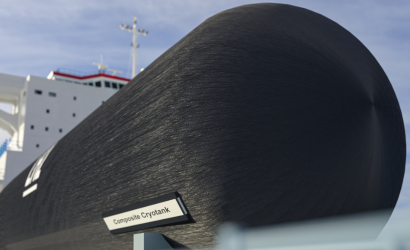
Cryogenic Material Stress
Current hydrogen tanks experience extreme thermal cycling at liquid hydrogen temperatures (~−253°C). These conditions place significant stress on composite materials used in storage systems.
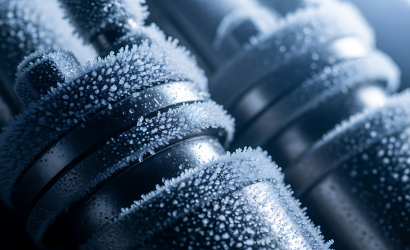
Microcracking and Leakage Risk
Low temperatures can trigger microcracks within the polymer structure of composite tanks. Over time, these cracks create pathways for hydrogen leakage, reducing reliability and safety.
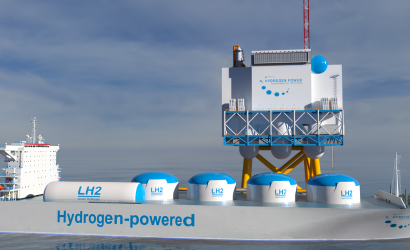
Heavy and Costly Tank Designs
To mitigate leakage risks, existing cryogenic tanks often become heavier, more complex, and expensive, limiting their use in transport systems and spacecraft.
How CryoPolymer Works
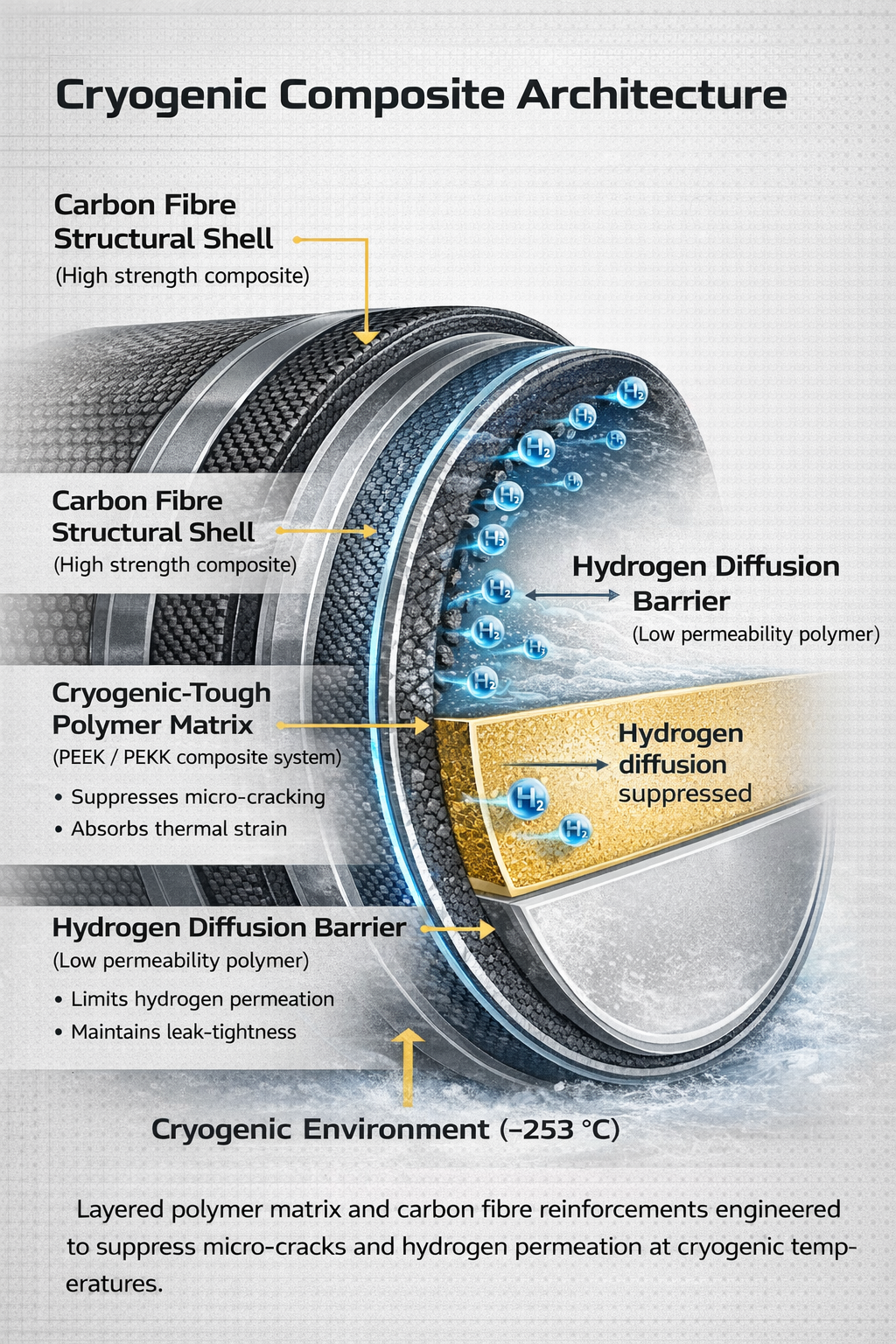
Our Solution
Advanced Materials for Reliable Liquid Hydrogen Storage

Cryogenic-Ready Polymers
A tuneable polymer-composite that retains ductility at liquid hydrogen temperatures.

Microcrack Prevention
Arrests microcrack growth during cryogenic cycling, reducing hydrogen leak risk.

Higher Performance Storage
Enables lighter LH₂ tanks with improved storage efficiency and longer service life.

Drop-In Manufacturing
Compatible with existing composite manufacturing, lowering repair needs and lifecycle costs.